3 Useful Rules for English Phrasal Verbs - Look at the following sentences: “We need to find out when this happened, and why.” “If you don’t have a solution to the problem, why bring it up?” “She makes up little stories to entertain the kids.” The verbs find out,...

Post Category: Grammar Guide
Vocabulary: Expressions, Idioms, Proverbs and Euphemisms
Expressions, Idioms, Proverbs, Euphemisms and Adages: What’s the Difference? The English language includes many colorful phrases that hold a special meaning. For example, most language learners know the words 'hit' and 'book', but when someone says, "It's time to hit...
Understanding Clauses and Phrases: Grammar Guide
Understanding Clauses and Phrases - Developing advanced language skills requires understanding the structures and rules that are working inside sentences to create meaning. Language learners need to know the jobs that words can do both individually and when they join...
Vocabulary: Compliment vs Complement
Vocabulary: Compliment vs Complement - In this article we'll take a look at another pair of English words that can cause confusion: Compliment vs Complement. Although they look very similar and sound exactly the same, their meanings are very different. Let’s see how...
Vocabulary: 8 Common English Phrases with Surprisingly Dark Origins
Vocabulary: 8 Common English Phrases with Surprisingly Dark Origins - What do criminals, horse-drawn carriages, and hats have in common? They all helped shape the way we speak English today! English is full of strange and colorful expressions that don’t always make...
Vocabulary: Correctly Using Normal, Typical and Regular
Vocabulary: Using Normal, Typical and Regular Correctly - English has many words that seem similar but carry important differences in meaning and usage. Three such words—normal, typical, and regular—are often confused by English learners. While these words can...
Vocabulary: Using Say, Tell, Talk and Speak
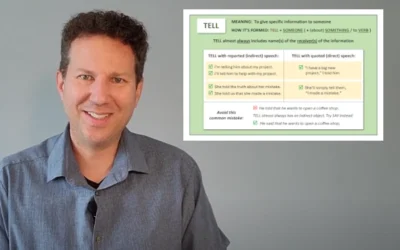
Vocabulary: Using Say, Tell, Talk and Speak - This video lesson will help you recognize how and when to use these four important verbs. Click here to download a free pdf of the charts presented in the video:For more practice, try completing the practice exercises...
Participial Adjectives: Grammar Guide
Participial Adjectives: Grammar Guide - This video lesson offers rules and examples for understanding participial adjectives and using them to create great English sentences.When working with participial adjectives, remember the rule: Use Present Participle (-ing)...
4 Apostrophe Rules: Grammar Guide
4 Apostrophe Rules: Grammar Guide - Apostrophes may be small, but they have a big impact on grammar! Correct usage of the apostrophe shows your reader that you care about the details. They may seem easy, but there are plenty of places where any of us can have a...
5 Rules for Using A and The in Sentences: Grammar Guide
Using A and The in Sentences: Grammar Guide - Even for people who are quite fluent in English, using A and The can still be confusing. This guide will help you use them correctly! A/An and The have the grammar name 'articles.' These three words belong to a larger...
More from ESL Advantage
40 Amazing Experiences Around Seattle
40 Amazing Experiences Around Seattle - The city of Seattle and surrounding areas—often called the Puget Sound region—is a beautiful and exciting place to live or visit. Whether you like being outdoors, meeting new people, or exploring a new city, there’s something...
Build Active Vocabulary: Mental Strategies and Quick Tips
Build Active Vocabulary: Mental Strategies and Quick Tips for English Learners Whether your English language ability is beginner, advanced, or somewhere in between, continuing to increase your vocabulary knowledge can feel very challenging. In the middle of a busy...
Polite English: 3 Common Mistakes When Saying Please
Polite English: 3 Common Mistakes When Saying Please - Everyone recognizes the importance of being polite, whether it's in your first or second language. This is the reason that two of the first English expressions people learn are "please" and "thank you." In...